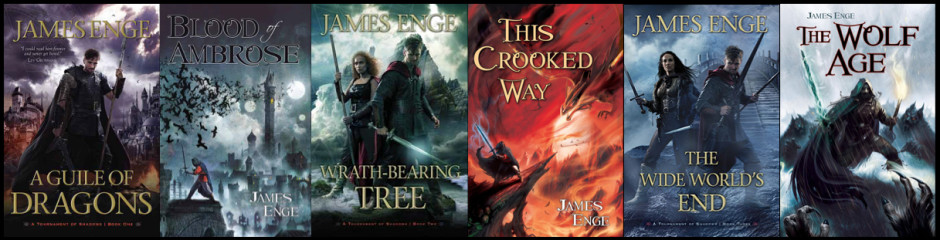
It’s natural not to name names in a general broadside like this, but I also think that it may be a mistake; one is as likely to wound friend as foe. However, since I’ve been writing for decades about an alcoholic wizard suffering from scoliosis, I’ll assume I’m not among the intended targets.
Appeals to weirdness fall friendly on my ear, anyway. Speaking as a reader, if imaginative fiction isn’t weird I’m unlikely to be interested in it. What’s the point? If the only weird thing about your story of an elf going through a midlife crisis is that it’s an elf going through a midlife crisis, you might as well de-elf that character and see if that story needs to be told at all.
Sameness has been a potential problem with S&S from the beginning, emerging as it did from the commercial magazine market before WWII, swarming with archetypes, tropes, and imitations. To the eye of love, there is an enormous difference between The Shadow, The Man of Bronze, and The Spider (personally, I’m a fan of The Spider, and Norvell Page generally), but a reasonable person might reasonably remark, “These guys are all the same!”
They are and they aren’t. But someone seeking strangeness is as likely to find it in the variety of events and characters that the heroes encounter as in the heroes themselves. That’s where the heroic pulpsters of yesteryear really brought the weird, and it’s one place where would-be heirs to pulp traditions should be bringing it.
More diversity in characters in heroes and characters is important, too, but (a.) I would distinguish that from weirdness of subject matter, and (b.) I think that some in the modern S&S renaissance are already on the case (e.g. New Edge Sword and Sorcery and Old Moon). Charles Saunders, Jessica Amanda Salmonson, and Samuel Delany are as important to the rising generation of S&S writers as REH, C.L. Moore, and Fritz Leiber. Anyway, that’s what I hear when I put my ear to the ground.
Re novellas and novelettes: these houses are already working on projects at longer lengths, and I wouldn’t be suprised if other S&S-inclined small publishers are, too. But it’s the nature of the short fiction market that there are always going to be more spaces for shorter stories than there are for longer stories. And longer stories aren’t necessarily weirder stories; arguably, they allow for a different, more slow-burn type of weird. But very short can be very weird. I cite R.A. Lafferty, and anyone reading this can probably think of other examples.
Re sameness: in conversations about sword-and-sorcery online there is the memetic sameness that bedevils all online conversations. Instead of making arguments, people wave tropes like flags: “Barbarian!”, “Big Snek!”, “Thews and More Thews!”. What this represents about what people actually think is moot.
All genre fiction—maybe all storytelling—exists in tension between two contradictory desires: the desire for something that’s the same (“I want something like Star Wars!”) and something that’s different (“This is boring—it’s just like Star Wars!”). (The academically minded might want to have a look at Umberto Eco’s “Interpreting Serials”, which talks some about this.)
That this tension exists is not a problem. The problem happens when it’s resolved—when lovers of the barbarian-warrior get their wish of 100% barbarian-warrior content and die of barboredom in the midst of barbundance.
I guess if the weird gets so weird that there’s no sameness anymore, no connection to the genre as the reader understands it, that this might also be a problem. However, in my experience, weirdness is harder to invoke than sameness, so I’d recommend always erring on the side of weirder.

I went through this in my mid/lye 20s. I thought I would never get tired of the fantasy setting in fiction. I still read it but I’m much more choosy now. Trying to go back to classics I missed or very highly regarded series. I’m looking for authors, not so much the genre.
I thought I liked Conan and all the stuff with his setting, but what I really loved was REH’s prose. That’s why the comics Conan or pastiches don’t really do it for me.