Below is an unmoderated comment on the previous entry. Poor Lydia: an internet full of porn and she has to touch herself thinking about me.

Below is an unmoderated comment on the previous entry. Poor Lydia: an internet full of porn and she has to touch herself thinking about me.
Emlyn Dodd has a nice piece up today at The Conversation about a newly excavated winery from the later Roman Empire. The property originally belonged to the Quintilii brothers, and then became part of the emperor’s holdings after Commodus had them murdered.
Of these innocent victims of tyranny, none died more lamented than the two brothers of the Quintilian family, Maximus and Condianus; whose fraternal love has saved their names from oblivion, and endeared their memory to posterity. Their studies and their occupations, their pursuits and their pleasures, were still the same. In the enjoyment of a great estate, they never admitted the idea of a separate interest: some fragments are now extant of a treatise which they composed in common; and in every action of life it was observed that their two bodies were animated by one soul. The Antonines, who valued their virtues, and delighted in their union, raised them, in the same year, to the consulship; and Marcus afterwards intrusted to their joint care the civil administration of Greece, and a great military command, in which they obtained a signal victory over the Germans. The kind cruelty of Commodus united them in death.
—Gibbon, Decline and Fall of the Roman Empire, ch. 4
The winery dates from the period of imperial ownership, and the article has some nice images of the excavations and the production of wine in the ancient world.

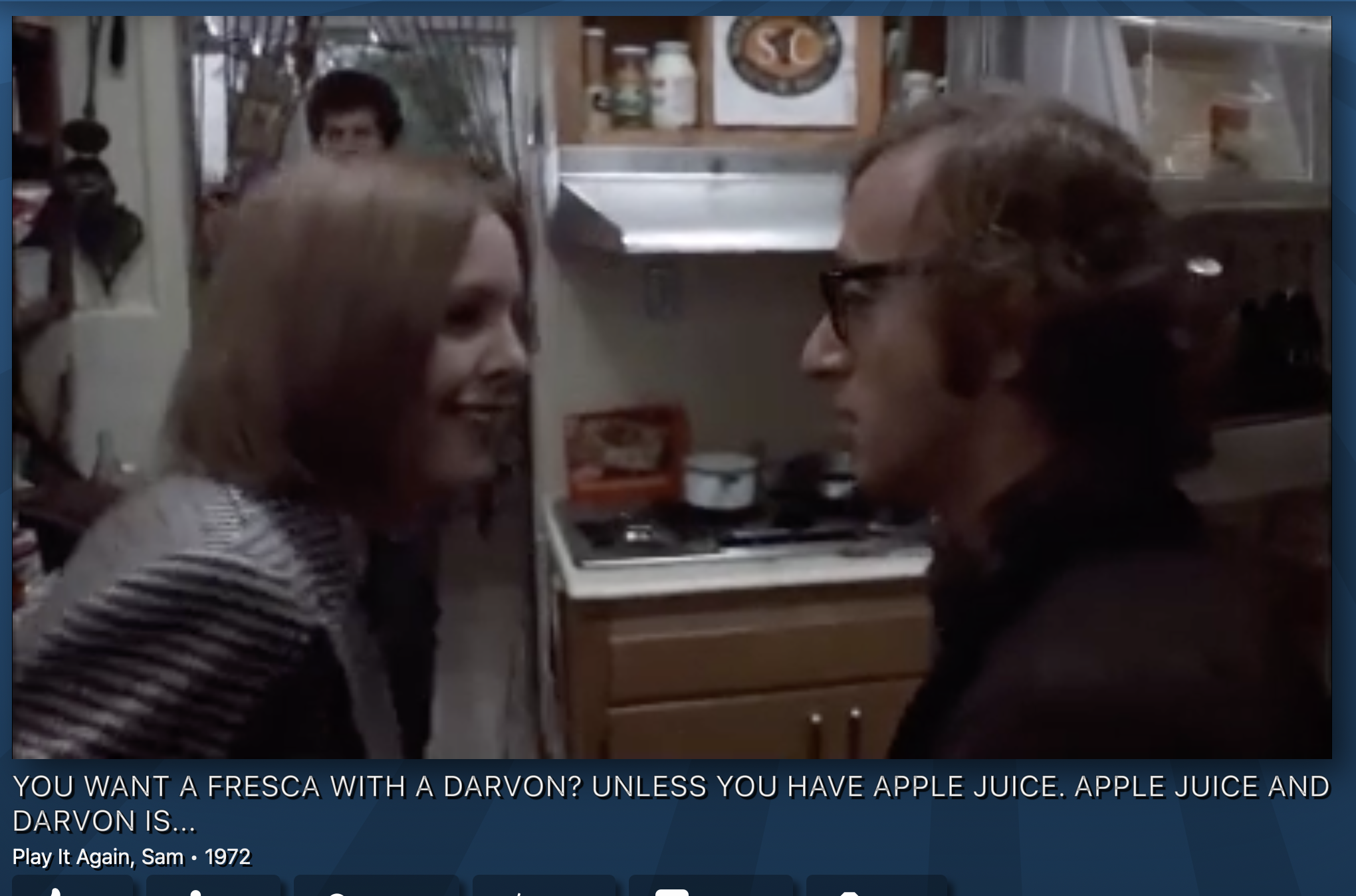
I was reading a harrowing story (at Vox.com) about the Vallow-Daybell murders which mentioned the concept of DARVO. It wasn’t brand-new to me, but I had sort of forgotten about it, even though the thing itself is as common as gnats in a swamp.
DARVO describes a defense strategy that abusers use to evade responsibility for their actions. The acronym was coined by Dr. Jennifer Freyd, and stands for “Deny, Attack, Reverse Victim and Offender”.
The perpetrator or offender may Deny the behavior, Attack the individual doing the confronting, and Reverse the roles of Victim and Offender such that the perpetrator assumes the victim role and turns the true victim — or the whistle blower — into an alleged offender. This occurs, for instance, when an actually guilty perpetrator assumes the role of “falsely accused” and attacks the accuser’s credibility and blames the accuser of being the perpetrator of a false accusation.
Jennifer Freyd, PhD
This is a powerful formulation, not because if refers to some exotic behavioral phenomenon on the fringe of human experience, but because we can all recognize it from stuff we’ve seen or heard about. People reading the description tend to think, “Sure, that reminds me of X”—some abuser that they knew or have heard about. It’s the strategy Cicero used in defending Caelius Rufus against the charge of attempted murder of his ex. It’s often used because it often works.
In the Vallow-Daybell case, Vallow’s estranged husband tried to alert authorities to crimes in progress, but Vallow used DARVO to convince the police that it was her husband who was the problem. Now that Vallow’s husband, Vallow’s children, and Daybell’s wife have been murdered in separate incidents, it’s clearer who the offenders and who the victims are, but some of those victims might still be around if the cops hadn’t succumbed to DARVO, with or without Fresca.
DARVO can be used by individuals or institutions, but I think it’s a useful paradigm to apply to politics. DARVO fits well with the paranoid style of rhetoric which has become dominant among the right-wing extremists who dominate the Republican Party (e.g. MTG with her brabbling about Jewish space-lasers, Jim Jordan’s flaccid, flatulent attempts to punish government agencies who have the temerity to enforce laws against Republicans, etc).
DARVO can be effective if it forces the conversation into terms favorable to the abuser. But Freyd’s research also suggests that the more familiar someone is with the gambit, the less likely they are to be fooled by it.
So I guess the TL;DR here is: don’t get DARVOed. Abusers, and their claques of defenders, are everywhere these days, as common as gnats in a swamp.
I just got the Hofstadter volume from the Library of America and I’ve been enjoying/suffering through a reread of “The Paranoid Style in American Politics”.

“Enjoying” because Hofstadter is a knowledgeable and deeply insightful writer with a dryly witty style; “suffering through” because the fringe movements he was writing about in the early 60s are the right-wing mainstream of today and it’s sickening to think how widely this dementia has spread through the body politic.
But it does help to explain why some people internalize any mental poison that someone like Trump or Margery Taylor Green pours in their ears. They have a place already prepared for it there, a long habit of paranoid thinking that takes on different details, depending on what is politically fashionable, but is always the same in form and effect: the nation/way of life/race is under attack by shadowy and nefarious forces, which justifies any action to defend it. The menace may change (Communists, black people, Jews, drag queens, immigrants, etc.), but there is always a menace and you are always being urged to war against it.
And you can’t make peace with Nefarious Forces Unnamed. You cannot compromise with Nefarious Forces Unnamed. Which means you can’t coexist with Nefarious Forces Unnamed, and the very existence of a pluralistic government becomes intolerable.
And so here we are. It would be nice to know where we can go from here, but Hofstadter doesn’t provide any clue for that (at least not in this essay).
This afternoon I was reading up on Danish King Gorm (a.k.a Gorm the Old, a.k.a. Gorm the Lazy, a.k.a. my new role model), and idly wondered if it was the same root as the gorm in English gormless “clueless”.

It would seem not. It looks like the -r- was added to gorm after r-deletion dialects emerge in Early Modern English; older forms are spelled gom, gome, etc. The Tyrant OED throws up its hands and despairs of finding an etymology for gom(e).
There’s an archaic English word gome meaning “human being” (usually used of a man but can also describe a woman) which I thought and still think might be the source of English gorm. If you lack the discernment of a human (gom<e>), you’re gormless. This is plausible, but so is every folk-etymology to the folk-etymologist who proposes it.
English gome is cognate with Latin homo (“a human being”) and both ultimately stem from PIE *dhghem- “Earth”, making them cognate with groom, chthonic, humble, homage, hombre, omerta, and the cham– in chameleon and chamomile. That’s a rich, earthy brew of etymologies, even if none of them is the one I was looking for.
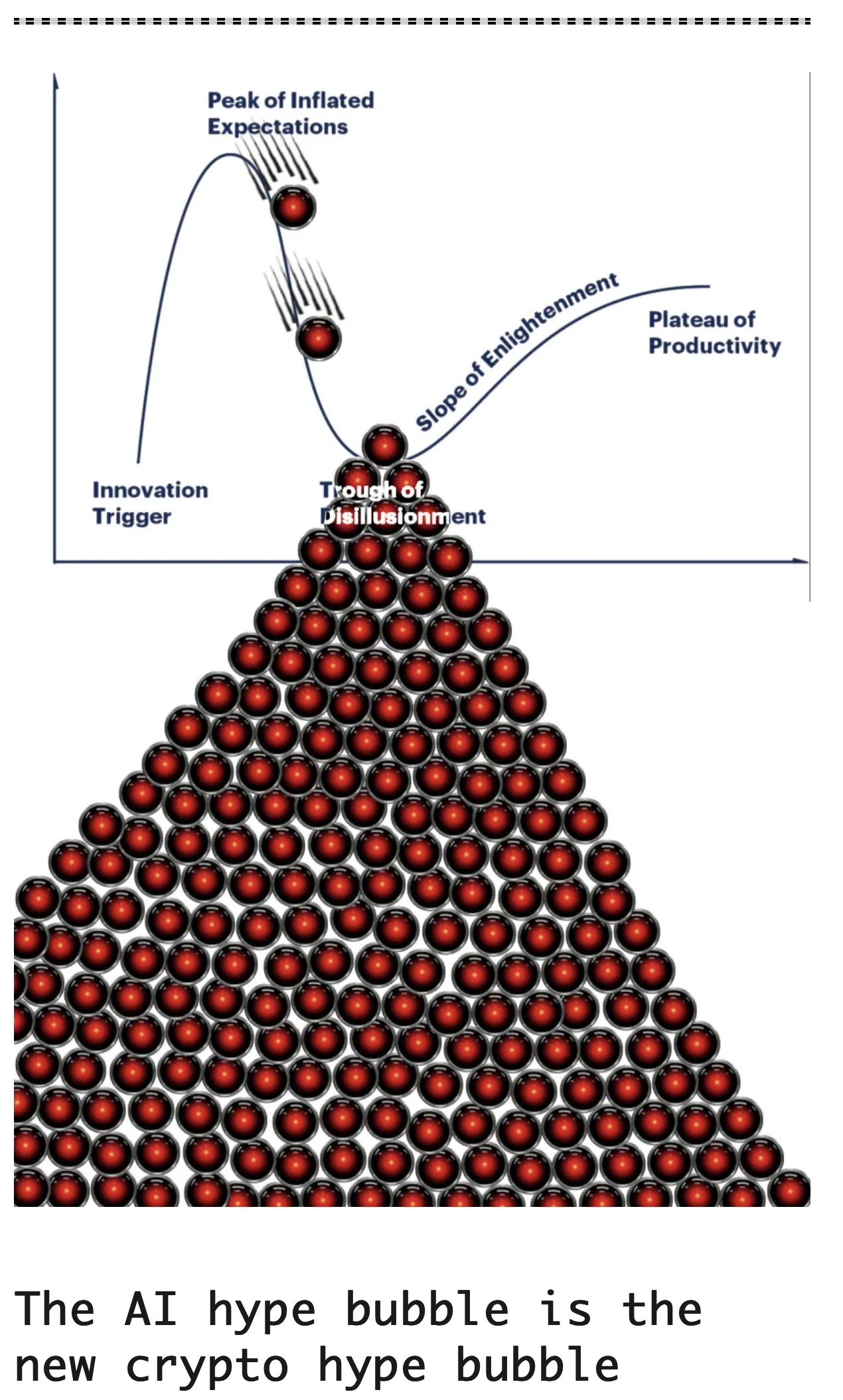
This is not exactly new, but it’s always fun to watch Cory Doctorow sticking a pin in the AI-hype bubble.
I especially enjoyed the proposal of an Italian ex-M.P. to rename AI as “Systematic Approaches to Learning Algorithms and Machine Inferences” or SALAMI.
In certi momenti, non sono le parole scritte che contano. Una voce, una carezza, un gesto di tenerezza, saranno sempre più forti e risolutivi di un miliardo di parole scritte dal più grande poeta di tutti i secoli. Noi viviamo di queste voci, di queste carezze, di queste tenerezze, non di libri. Io che scrivo lo so.
–Giorgio Scerbanenco
“In certain moments, it’s not written words that count. One voice, one caress, one gesture of tenderness will always be stronger and more decisive than a billion words written by the greatest poet of all time. We live by these voices, by these caresses, by these tendernesses, not by books. I, a writer, know this.”

Typo of the day (which I discovered in an old slideshow from earlier this year): Gabolen. I’d intended to write Ganelon (the sinister traitor-knight in Charlemagne’s court). But Gabolen sounds like a pretty convincing name; maybe he/she/it will appear in a Morlock story someday.
This is going to be a tough post to write—no easier because I’ve seen it looming for a while.
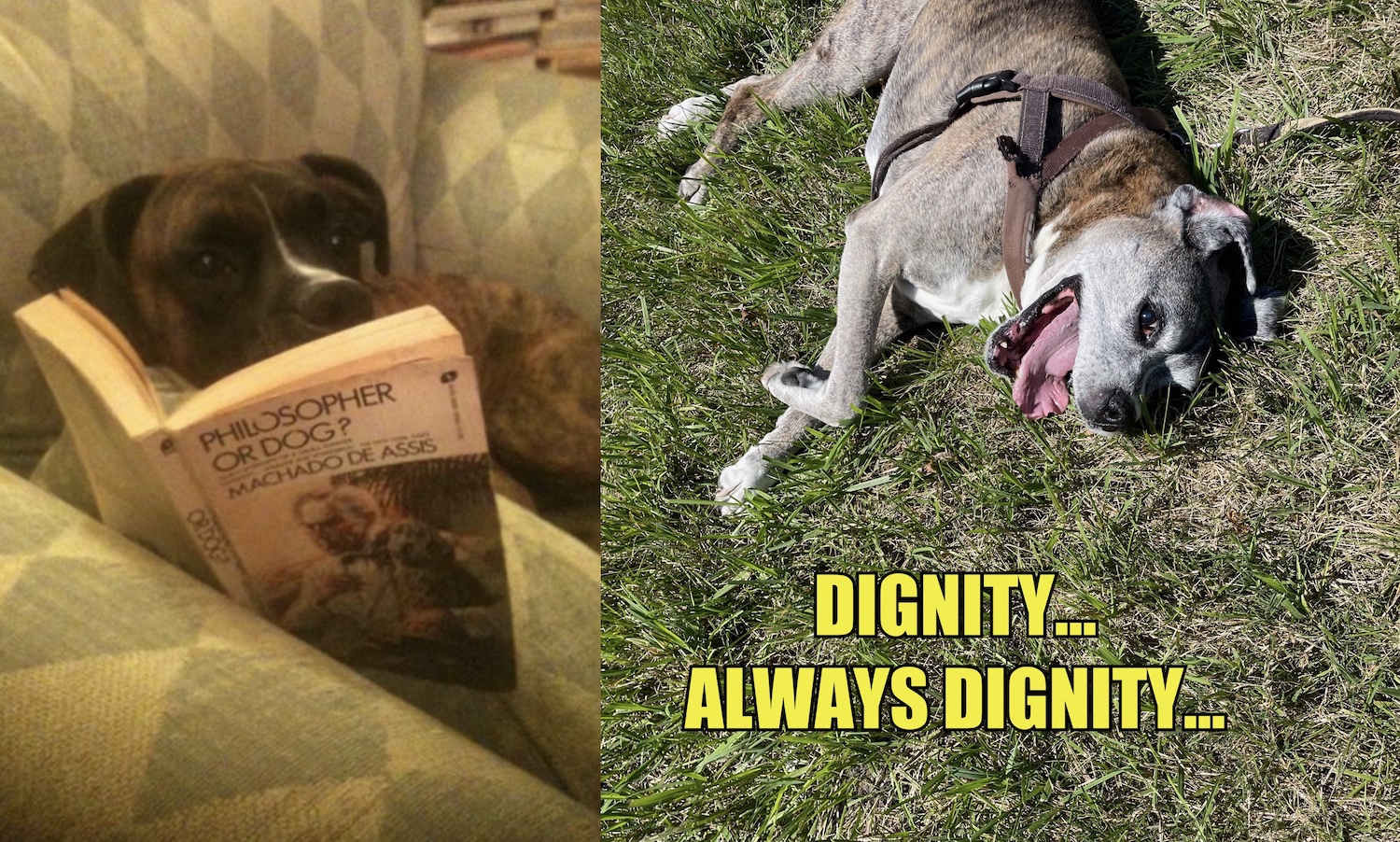
Lennie Briscoe, the Great Detective, has gone to investigate the ultimate mystery. His spine gave out last night and we just couldn’t let him suffer any more. There are a lot of cold empty places around the house today that used to be warm and philosophically fuzzy.
Omnia mutantur; nihil interit.