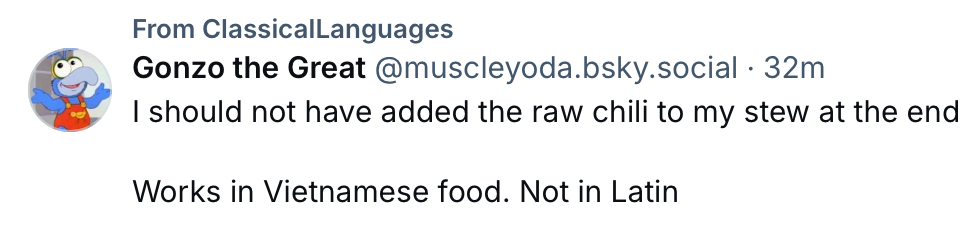
I was trying to figure out why you couldn’t say this in Latin, then thought, “Well, it could only improve garum”, and finally realized: oh, they mean cocina latina.
Some of these keywords for Bluesky feeds are deeply ambiguous. (“Conan” in the s&s feed is another one.) But I’m enjoying the surreal tangents they generate.
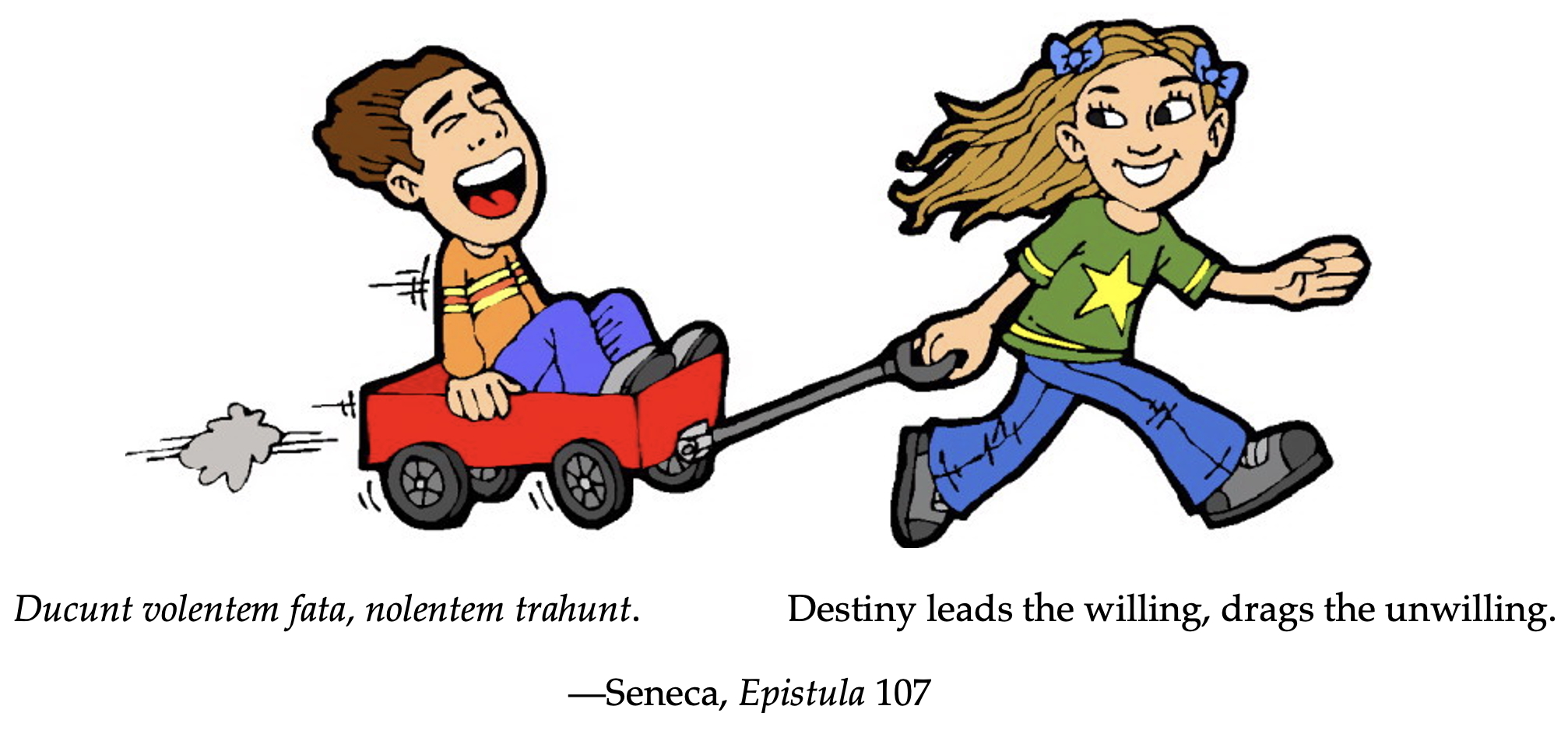
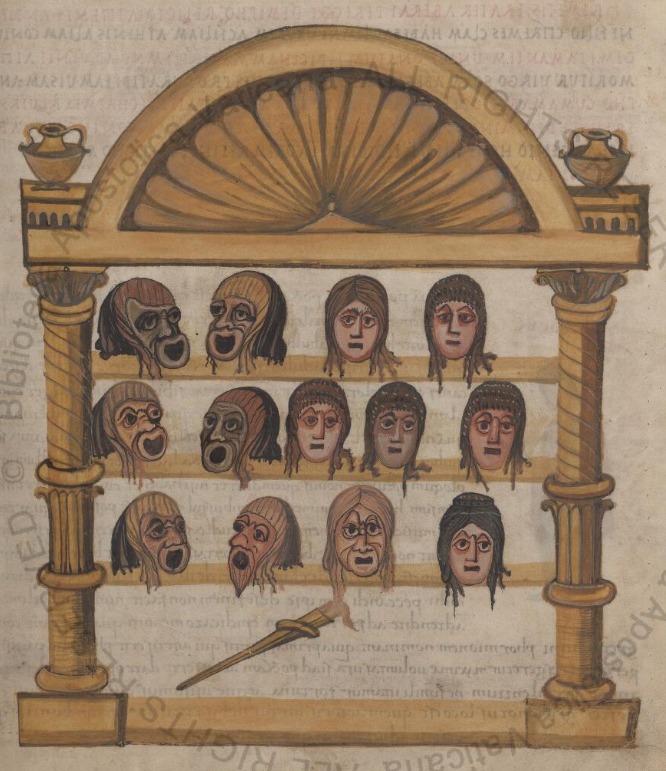
Here’s the decoration for my office-door schedule this semester. In some ways I’m one of the volentes, in most ways I’m one of the nolentes, but am feeling the motion either way.
Not sure who did the cartoon; the site I stole it from had stolen it from somewhere else without attribution.
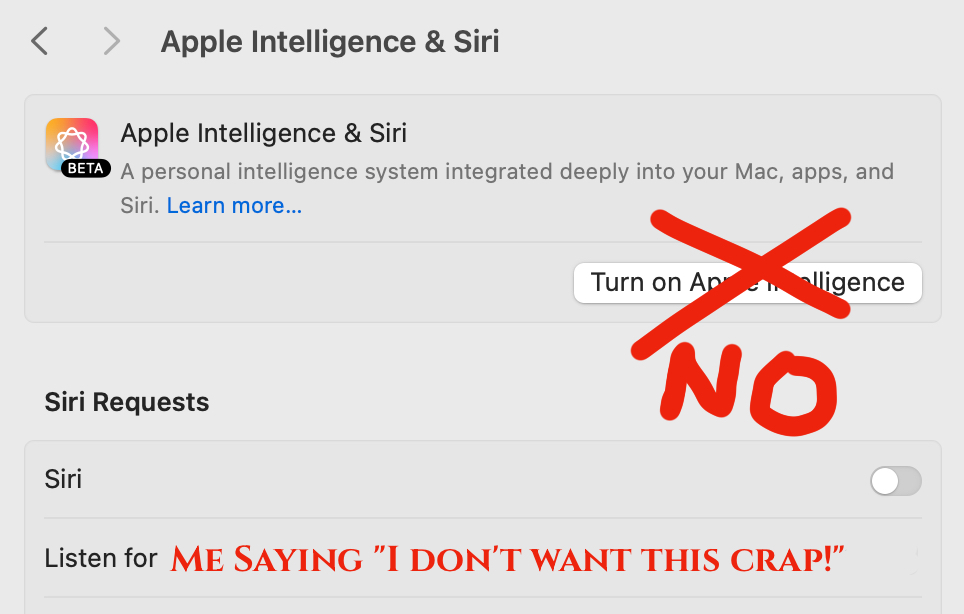
Apple pushed a notification about so-called “Apple Intelligence” to my computer. Since they don’t have a “Hell, no!” button, and punching the screen is a too-expensive indulgence, this is my reaction.
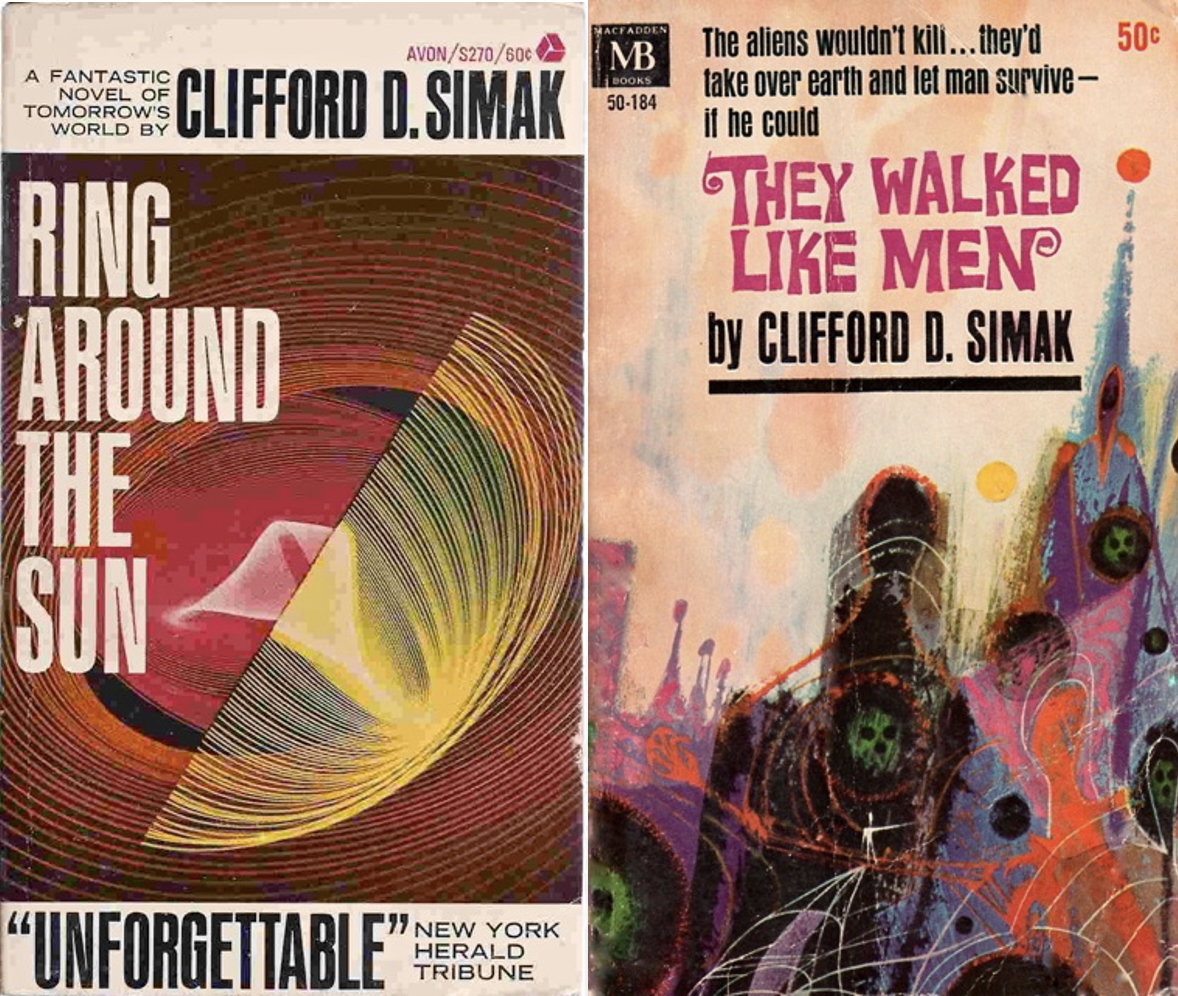
I was thinking about these Cold-War-era sf novels today, prompted by a Facebook post about vintage paperbacks, and it occurred to me that in both of them Simak is satirizing what we now call the Rot Economy. Simak’s work, quietly and intensely weird, was ahead of its time because it was resolutely against its time.
Screenshot
Posted inUncategorized|Comments Off on Simak vs. Venture Capital
I’ve been reading the Gesta Herwardi (“The Deeds of Herward” a.k.a. “Hereward the Wake”), one of the original outlaw stories from England (although it’s written not in English, but in Latin—because, no doubt, Everything Is Better With Latin!™). The Robin Hood collection from T.E.A.M.S. that I got last week includes a translation of Gesta Herwardi, but (a.) it’s abridged, and (b.) it’s a translation. (There’s no translation like no translation.) I found the Latin in a couple places at the Internet Archive and have been plowing though it. (The text that the Robin Hoods translated is at the end of this edition of Gaimar’s English Chronicle. A bilingual edition with an English translation by Henry Sweeting appeared serially in Fenland Notes and Queries.)
It’s pretty good so far. Herward, like young Grettir Stark, seems to have been a jagoff in his youth: partying at his parents’ expense, defeating everybody at sports in the most insulting way, quarrelling and fighting with everybody, until he finally gets kicked out and his adventures proper begin. He kills a terrifying bear, who is himself the son of a famous bear that had human hands and feet, could talk, and was wily in the ways of war. This Norwegian were-bear abducted a young woman who later gave birth to Beorn (“bear”), King of Norway. The bear that Herward fights is apparently the were-bear’s son by a different consort, because he’s all-bear but very large and savage.
Later Herward runs up against a giant warrior called Ulcus Ferreus, kind of a weird name. The ferreus is pretty straightforward: it means “(made of) iron”. But ulcus just means “sore” in Latin (coming into English as ulcer). I couldn’t believe there was a guy running around with the name “the Iron Sore”, so I looked up Sweeting’s translation to see if he offered any alternatives, but he just translates it as “Iron Sore”.
To my mind Ulcus is more likely a non-Latin name that’s had a Latin ending tacked on (which is how the writer treats most of the non-Latin names in their text, starting with Herward himself). I just can’t figure out what that name would be.
The guy in question is Scottish, and ulk might be a Celtic root, but those languages are closed doors to me, so I haven’t had any luck finding one that might fit here. I wanted the name to be something like Hulk, which has a nice comic-booky feel for a giant warrior, and hulcus is an Old English word, deriving from Medieval Latin hulcus (“a bulky ship that needs to be towed”). But I can’t figure out a reason for the initial h to be dropped, unless there were some proto-Cockneys running around northern Britain in the early Middle Ages.
The same Proto-Indo-European root that produces ulcus in Latin yields words meaning “rotten, stinking” in some Germanic languages. (Or maybe those are loans from Latin ulcus; sores do sometimes rot and stink, especially if the medical care is on the ancient/medieval level.) And ulk is a dialect word for “skunk” in Dutch., according to Wiktionary and the Etymologiebank at the Meertens Institute.
So I’m calling this guy “Iron Skunk” until forced by lawsuits or superior philology to do otherwise. Maybe Iron Skunk will pal around with Ratlick in an upcoming Morlock story.
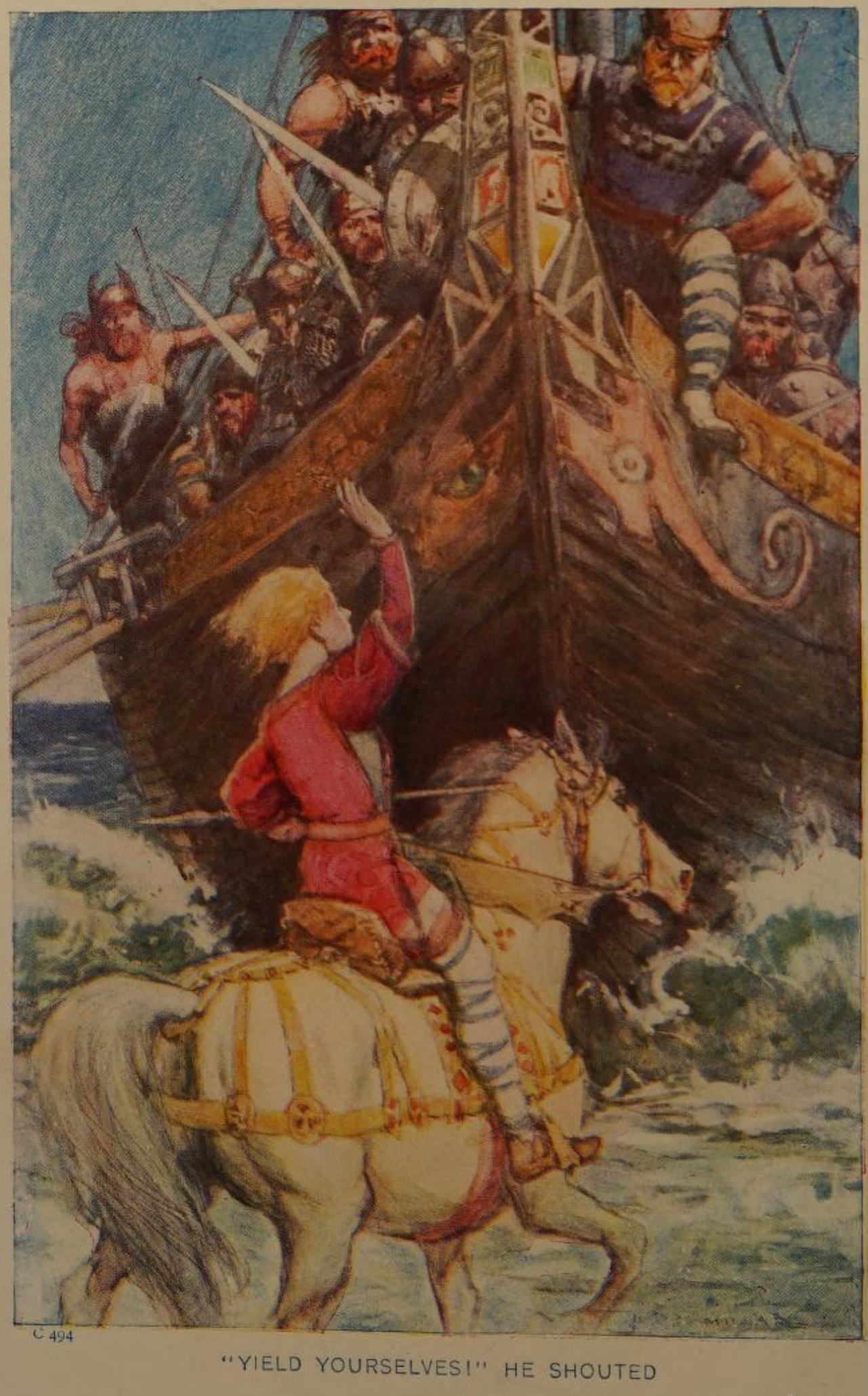
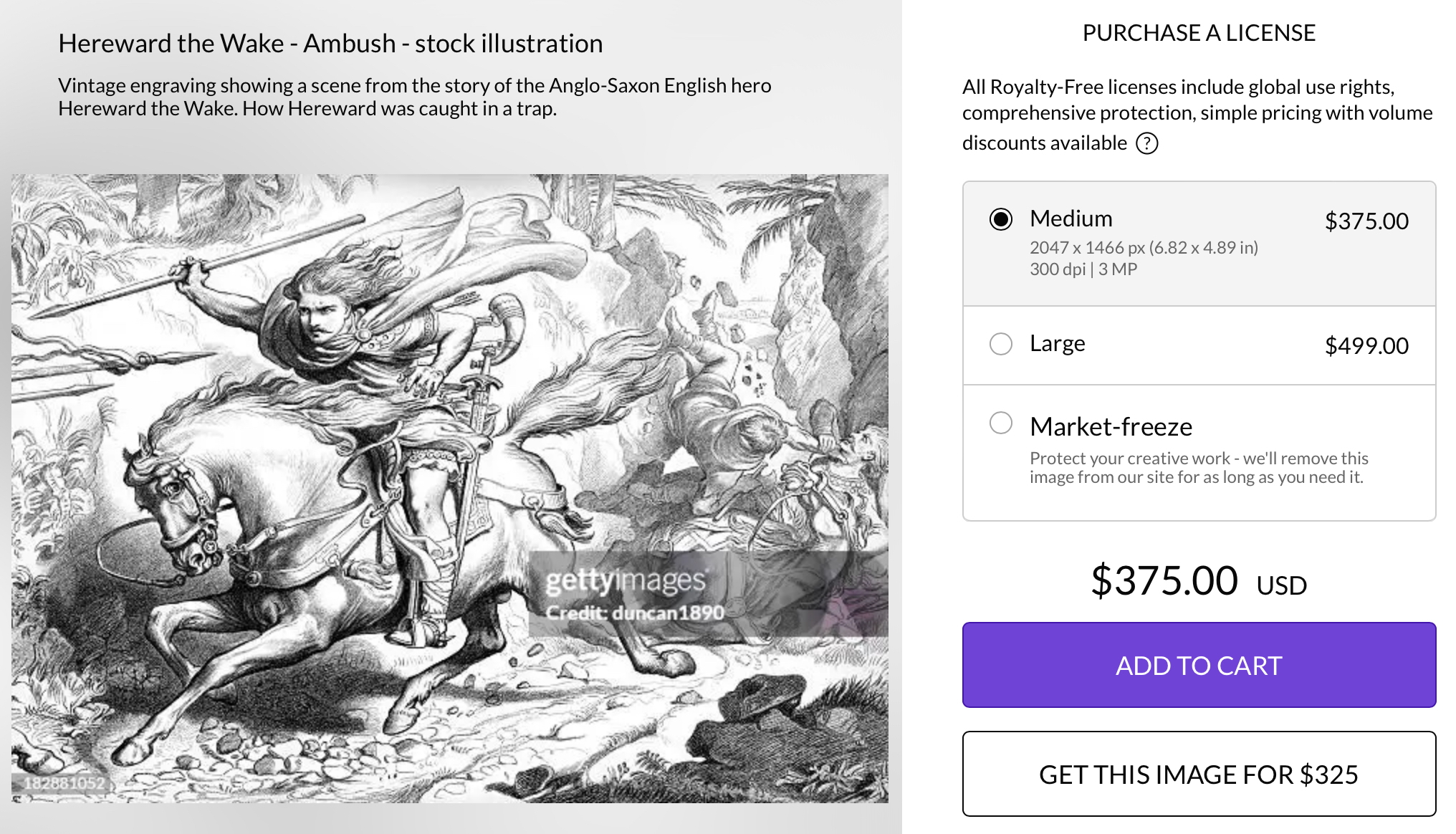
Speaking of skunks: I was looking for an image or two of Herward to brighten up the dusty, skunky tedium of this post and I found quite a few public domain images. A lot of them had been watermarked by copyleft-thieves like Getty and Alamy, who will charge you a few hundred dollars for images that they don’t own and should not control. That stuff should be illegal.
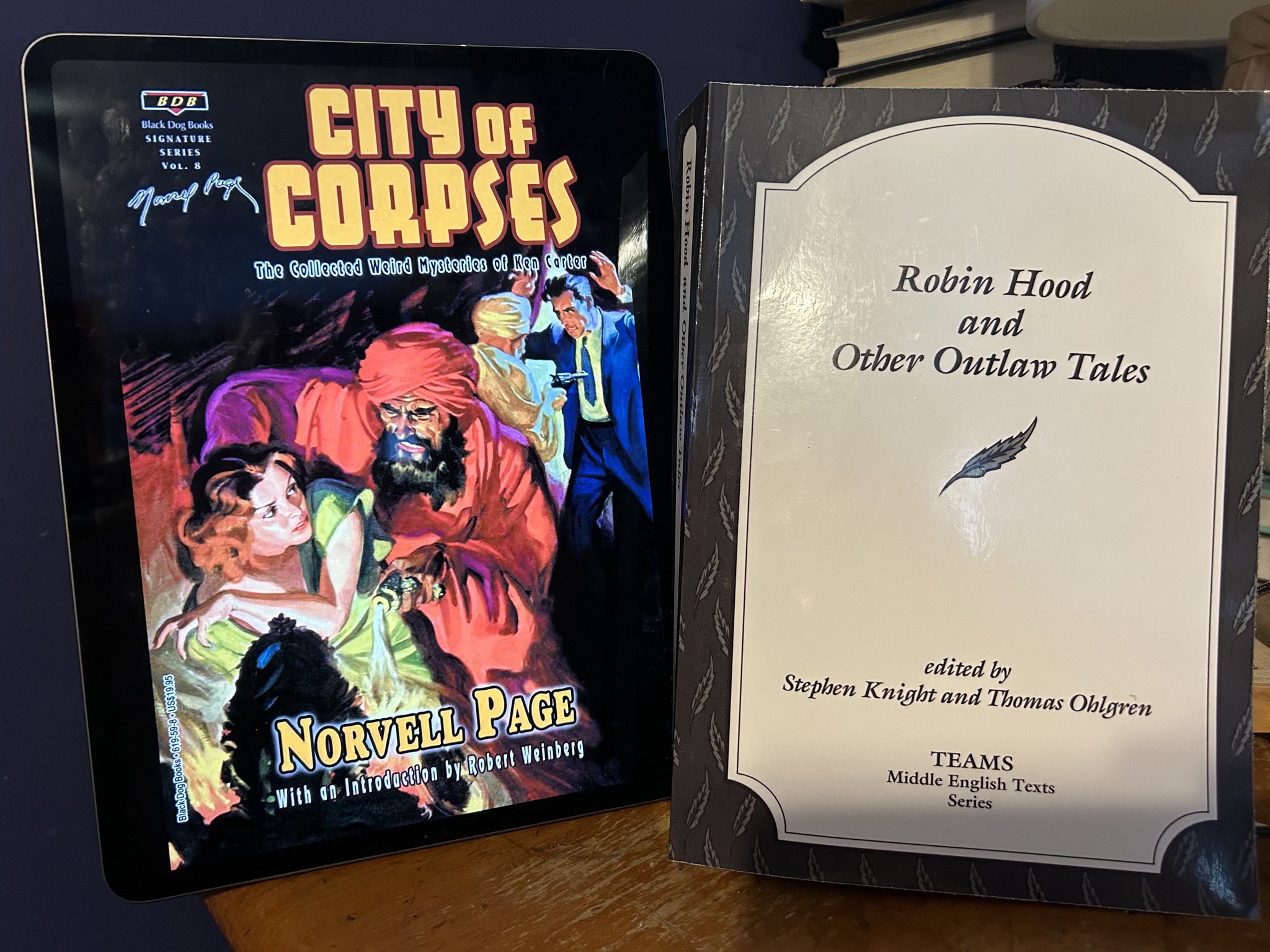
Left: The Black Dog Books edition of Norvell Page’s City of Corpses: The Collected Weird Mysteries of Ken Carter. Right: The TEAMS edition of Robin Hood and Other Outlaw Tales (edd. Knight and Ohlgren).
Posted inbooks, sff|Comments Off on New Editions of Old Stories
I’ve been watching through The Outer Limits (1963-1965), a show I have fond memories of from when I was a kid.
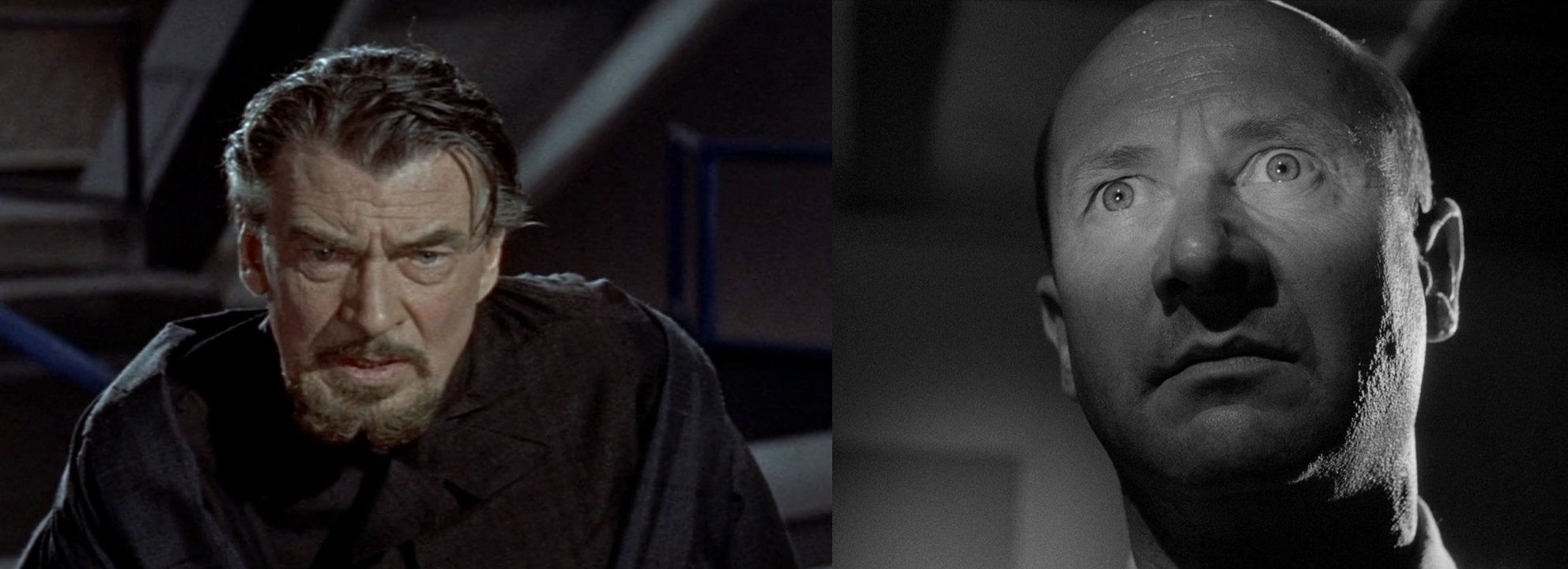
Uff da. They’re mostly terrible so far. The best episode of the first five was 1.4 “The Man with the Power”, with Donald Pleasance, a pretty good story–but a lot better when it was the plot of Forbidden Planet seven years earlier.
Each of these men is sharing his brain with someone he doesn’t know very well. That person is… himself!
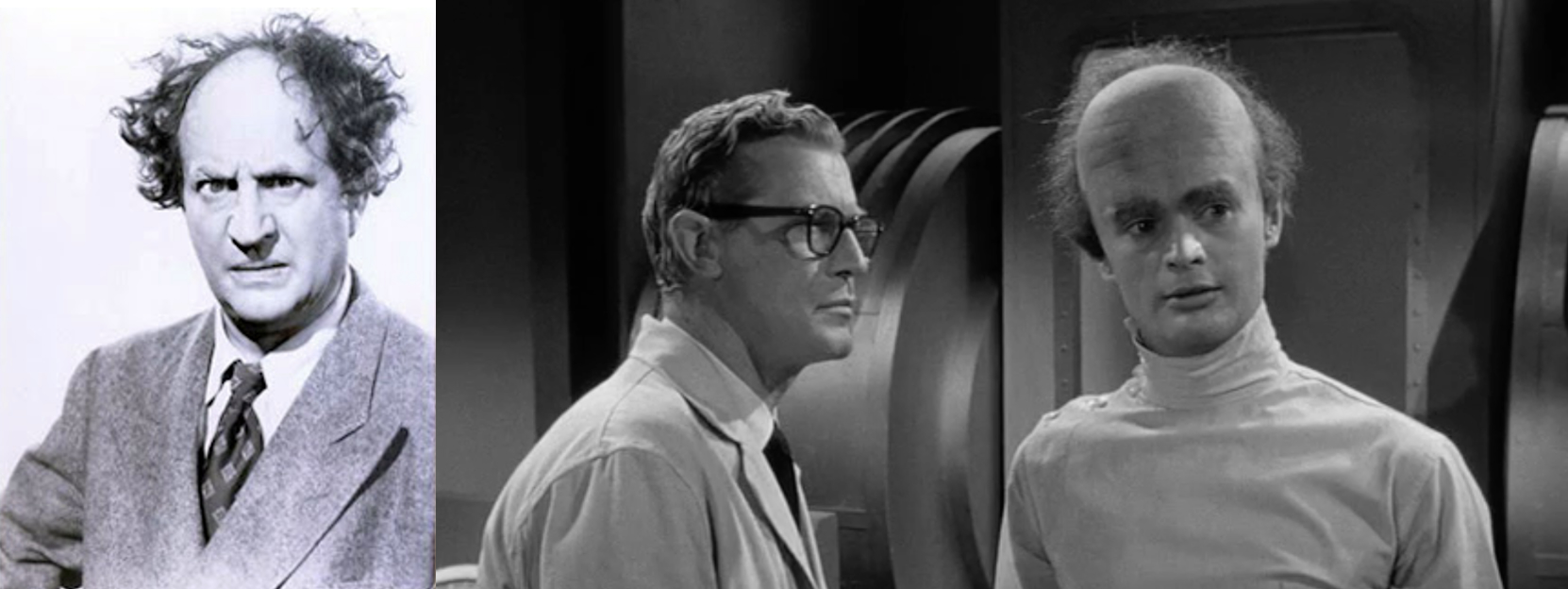
The next episode is another–homage, let’s say, to older sf: this one borrowing from Hamilton’s “The Man Who Evolved” (1931). Edward Mulhare plays a scientist intent on exploring the secrets of humankind’s future evolution, something Man Was Not Meant to Know (Nor Woman Either, If That’s What You’re Thinking, Éowyn).
David McCallum plays the scientist’s test subject, an unemployed coal miner with ideas above his station. In the first part of the episode, he looks like David McCallum with dirt on his face. In the second part of the episode, after he’s stepped out of Mulhare’s magic box, imbued with all the inconceivable powers latent in a human being after !T*E*N! !T*H*O*U*S*A*N*D! !Y*E*A*R*S! of evolution, he looks like… Larry Fine from the Three Stooges.
Left: Larry, Larry he’s so Fine Middle: Edward Mulhare as Professor Mathers (first name Jerry?) Right: Larry Fine again, or a highly evolved David McCallum
This was too dark a vision of the future for me to handle at the moment, so I turned it off. I’ll finish it later when I feel more able to peer into the abyss.